









There’s still lots of love for the humble beach or dune buggy in the UK. There actually seems to be a resurgence of the genre. If you were at the National Kit Car Show at Malvern in recent years, you will have seen the good folk at the UK Buggy Club’s ever-expanding club pitch. Anyway, STEVE HOLE tells the story of a real classic beach buggy, the BUGLE.
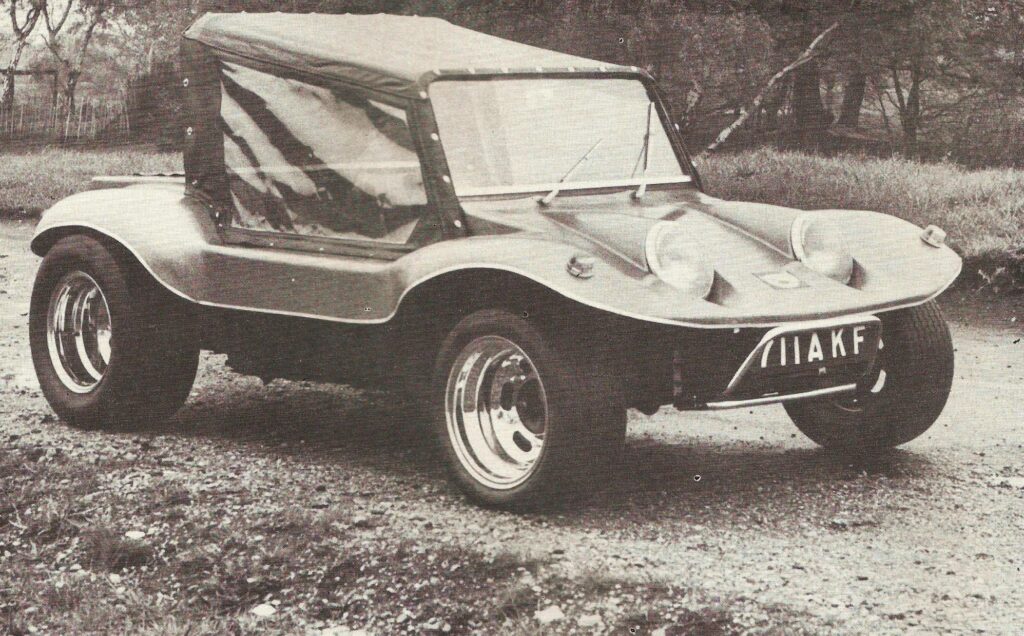
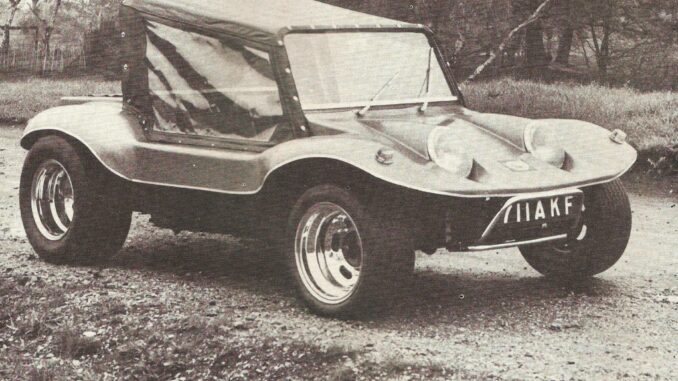
It is Roland Sharman, of Sharman Drag Company Ltd who must be credited as the creator and driving force of the Bugle. He enthusiastically threw himself into the project and really deserved so much more success than he actually got.
Prior to the Bugle he’d built bespoke turnkey GP Buggys (sic) under the Bugle Beachbuggies moniker, although this operation went bust in 1970.
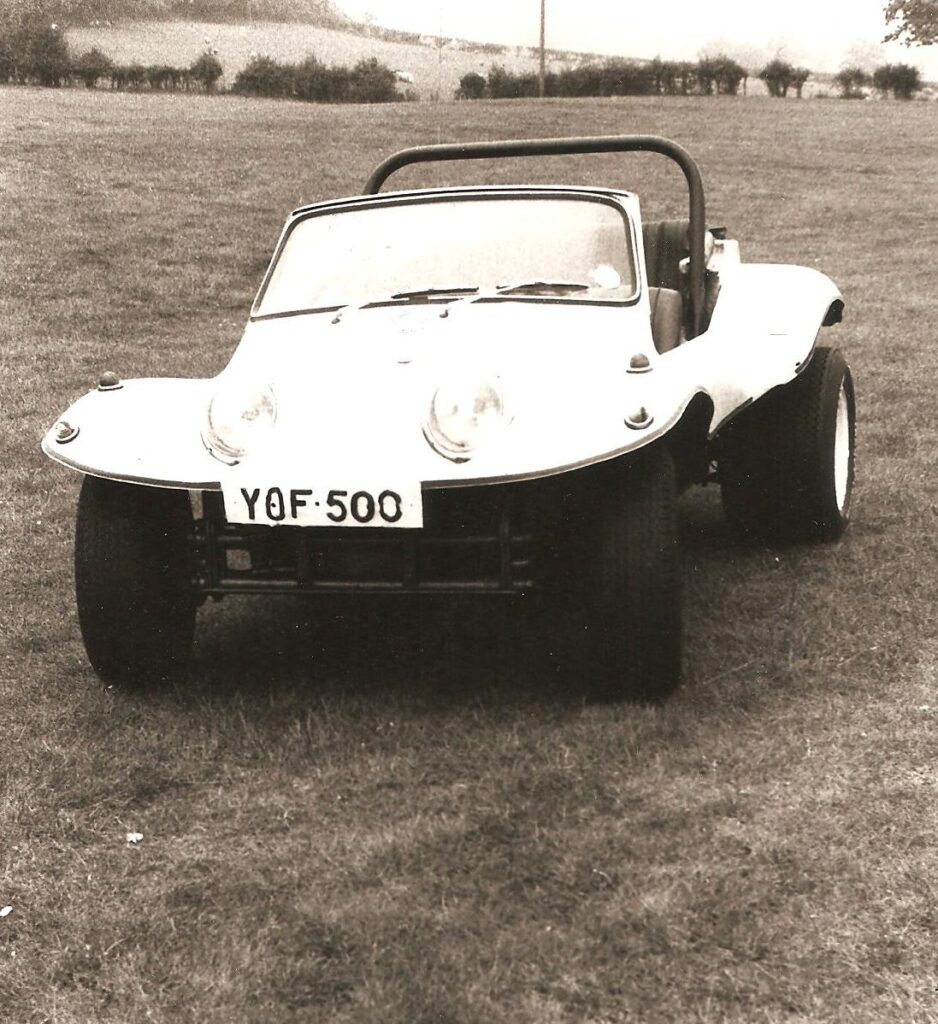
Bugle Plus 2
Then he formed a company called, Lotusmere, trading as the Bugle Automotive Traction & Manufacturing Company of London Ltd, basing himself in The Crypt at St Judes Church in Collingham Road, Fulham, West London.
A little while later he got a £30,000 loan from a merchant bank which provided much needed capital.
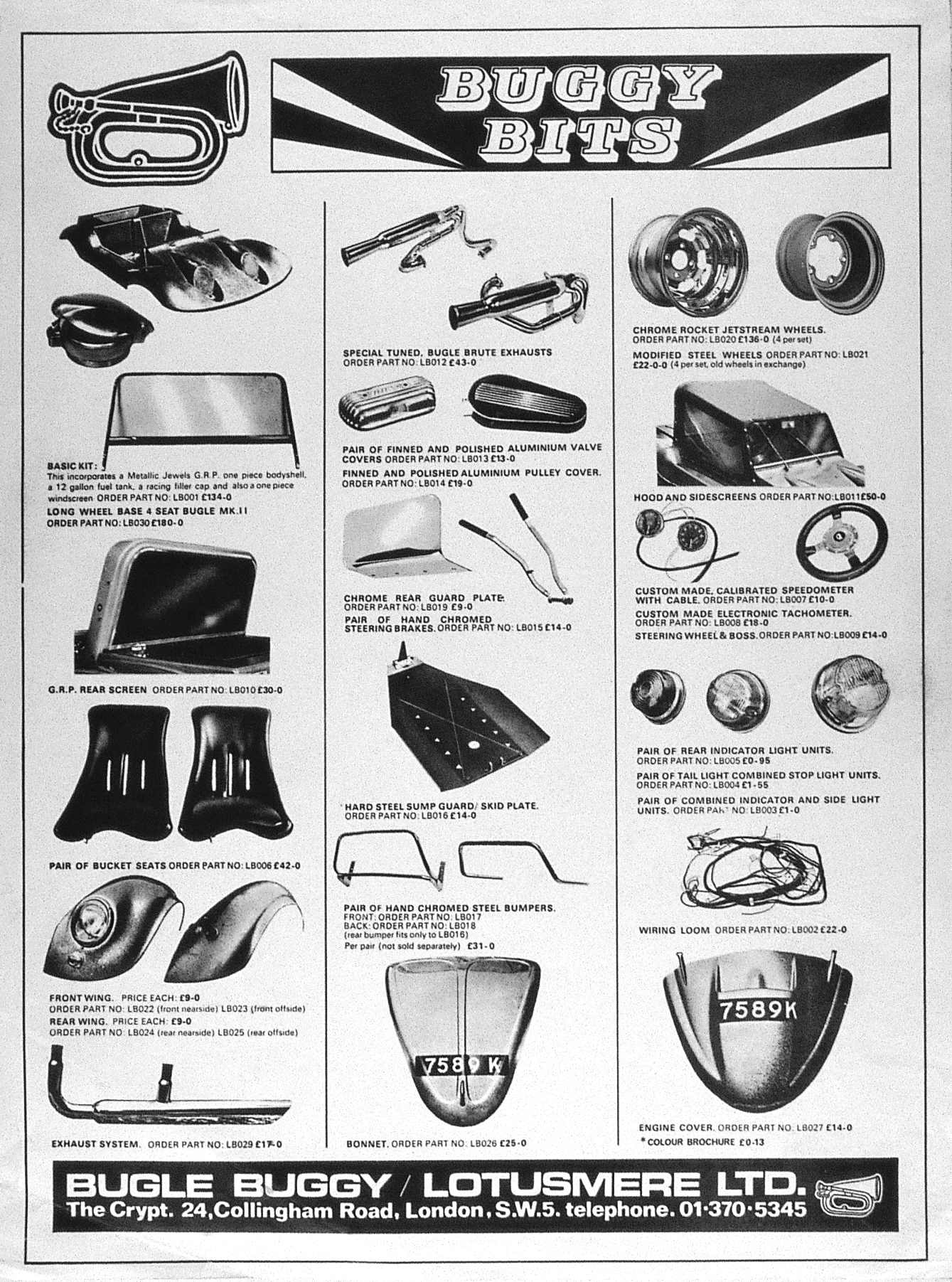
Based, un-surprisingly, on the ubiquitous VW Beetle mechanicals and floorpan and inspired by the American Bugetta buggy, designed by Jerry Eisert. However, the Bugle was actually an original Sharman design, as mentioned. It was consciously tailored to the UK market.
It was based on a 78½in shortened Beetle floorpan. The Bugle did very well from the start, with King Hussein of Jordan ordering four well-appointed examples and Sharman sending 75 kits to Rocket Wheel Industries of California. Real ‘coals to Newcastle’ stuff!
The Bugle was apparently christened by Sharman’s wife who reckoned that the exhaust pipes looked like bugles … the bodies were made by a company in Sheerness, Kent.
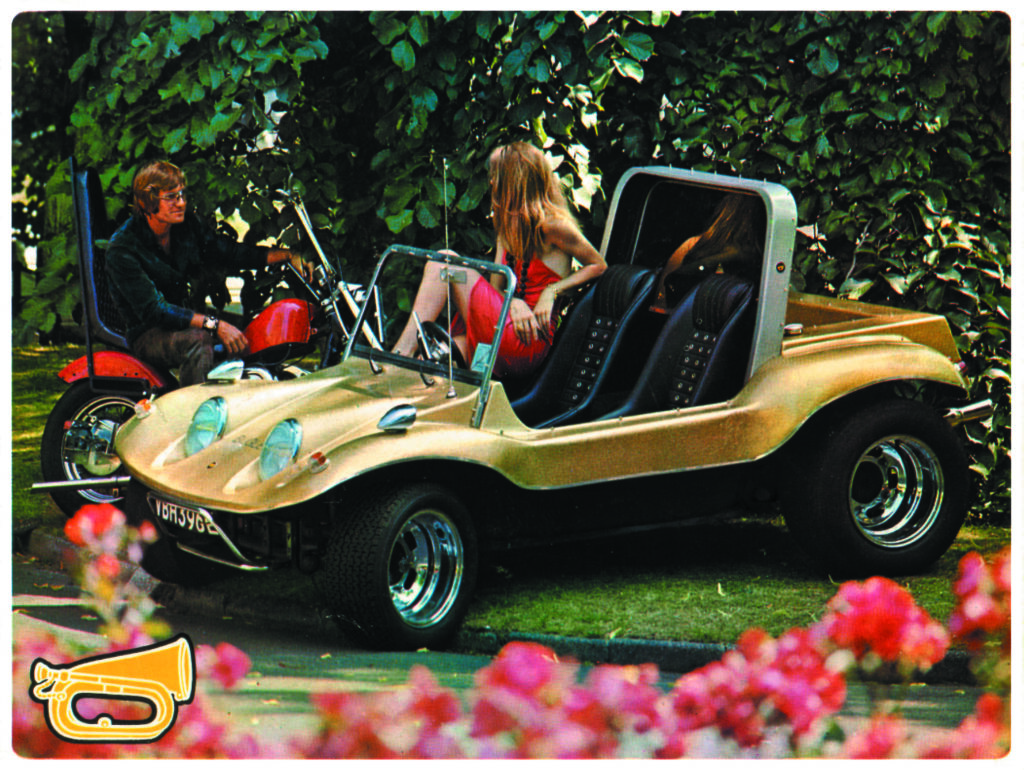
It was expensive by comparison to rivals (kit priced at £160) but customers didn’t seem to mind and they loved the integrated inset ‘frogeye’ style headlight appearance and wider stance, with bigger wheels than the norm, a deliberate move by Sharman as he hated narrow buggies on narrow wheels.
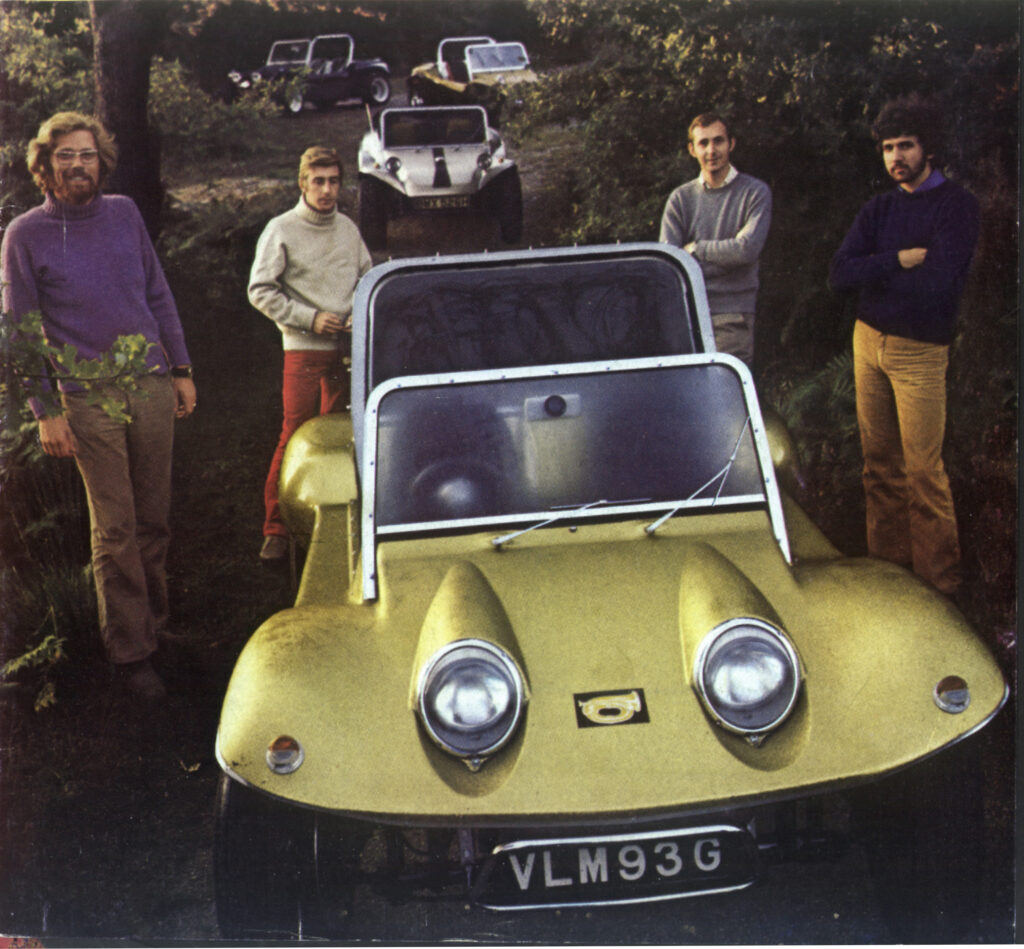
One chap was so desperate to get his hands on one, he even swapped his two-week old Radford Mini DeVille! No doubts that the Bugle was created for cruising the King’s Road rather than the beach as it was bigger and more practical, which was part of its appeal.
Roland also got good exposure from TV appearances, with a Bugle featuring in adverts for Lentheric cosmetics, de Beers diamonds and Ingersoll watches, although the planned appearance on the Dr Who TV programme didn’t happen after a BBC researcher pranged it prior to filming!
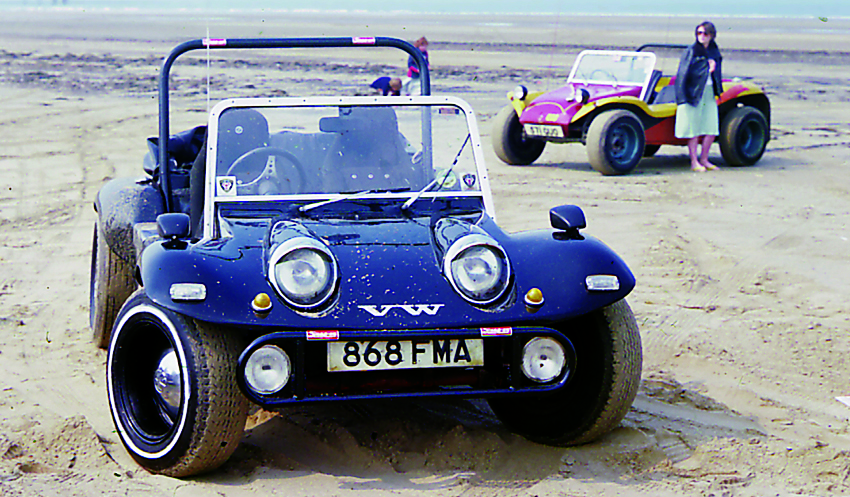
When Airfix was looking for a buggy to use for one of their glue-together kits they chose a Bugle as the subject. Possibly THE trendiest buggy of a trendy scene and even appeared at the Geneva Motor Show in 1970 and also on the front cover of Motor magazine.
A move to a 15,000 sq/ft unit in Reading, Berkshire, where they were manufactured and a retail site in Battersea was necessitated when the crypt premises in Fulham burnt down!
A long wheelbase, Bugle Buggy Plus 2 on un-modified VW Beetle floorpan, didn’t do so well, with only about 20 sold, despite a high-profile launch at the Custom Car show at Crystal Palace.
The wheels came well and truly off Sharman’s operation in 1971 though when the bank wanted their loan back – in one go! He so almost hit the six he was looking for however, as a deal with Volkswagen for worldwide distribution failed at the last minute. So close yet so far … a real shame.
Sharman had one final attempt, trading as Bugle Developments & Marketing Ltd from September 1971. He enthusiastically entered the Senior Service Hill Rally that same month, while they set about a van version, too, which ultimately didn’t appear. They raised kit prices to a whopping £297, which probably did for them.
Mind you, not before they had commissioned designer, Peter Stevens, to come up with an intended special edition Bugle GT capable of 150mph, powered by a mid-mounted Chevy V8 engine. Yet more bad luck as that came to nought when the Sheerness laminator’s factory burnt down taking the GT prototype with it in 1972.
The official Bugle story ended soon after…
In the early seventies, Stephen Foster of GRP kings, Fibresports, had acquired some Bugle moulds and sold his version of the buggy via adverts in Custom Car magazine between 1972-79. It was one of these sets that ended up with VW Beetle specialist, Yorkshireman, Chris Watson, in 1979, who carried on offering Bugles for six years before he packed up.
Meanwhile, when buggy guru, James Hale of GT Mouldings, re-launched the Bugle in 1995 he didn’t get the Watson moulds as many thought, rather he was offered an original set, thought long lost.
When James got them they were in a sorry state unsurprisingly and so he pulled two bodies from them, made one good one and then moulded from this to create the Bugle 2, which had an 82½ wheelbase.
He also took the opportunity to revise the styling a little while it now only required a 12in shortening of the Beetle floorpan. By this time, he was concentrating on the launch of his own, all-new GT Buggy and the Bugle went on to the back burner, by which time he’d sold around ten of his Bugle 2s.
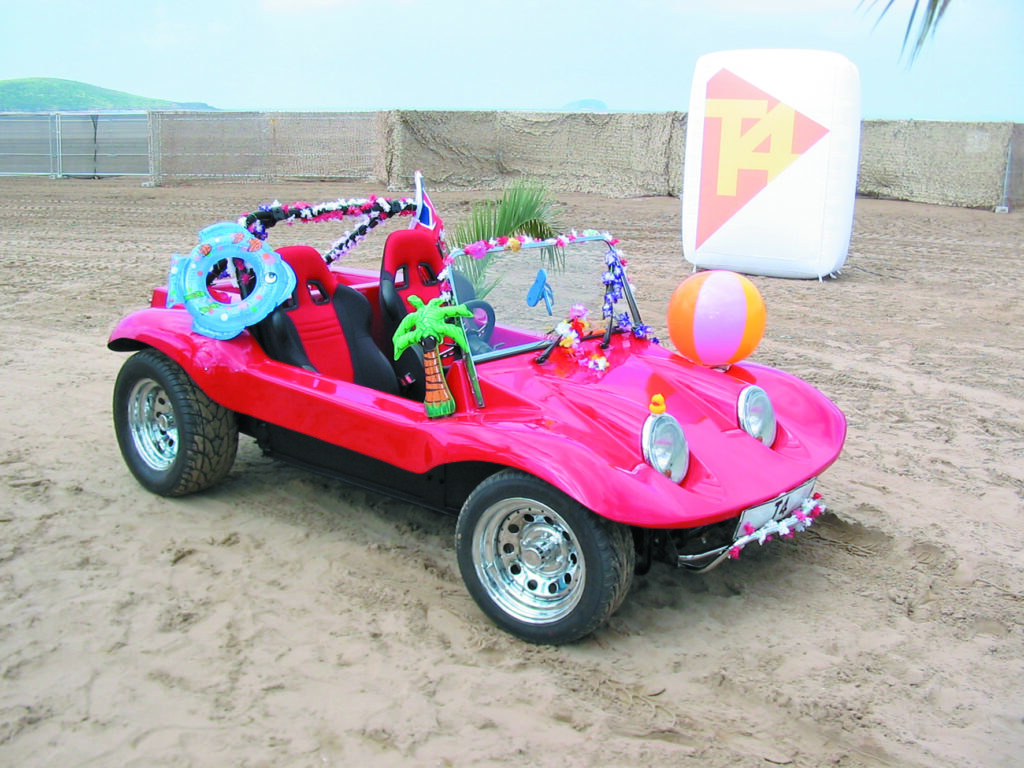
That’s not the end of the story, however, as brothers Tony and Rob Armstrong, based in Chelmsford, Essex then took over and further revised the Bugle and even made one in 2005 for Channel 4 TV’s ‘T4 On The Beach’ programme. They also planned a long wheelbase Bugle 3 version. Not sure if that was ever finished.
The Bugle can lay claim to several buggy ‘firsts.’ It was allegedly the first 100 per cent street legal beach buggy in the UK, it had the first weathergear AND is said to have been the first beach buggy to feature a Metalflake finish!
Not sure if you can still buy one but this is a very nice website dedicated to the Bugle which can be found at: www.buglebeachbuggies.co.uk
How many made? Possibly as many as 850 short wheelbase versions and 20 long wheelbase examples.
Photos courtesy of James Hales and Steve Hole’s archive