






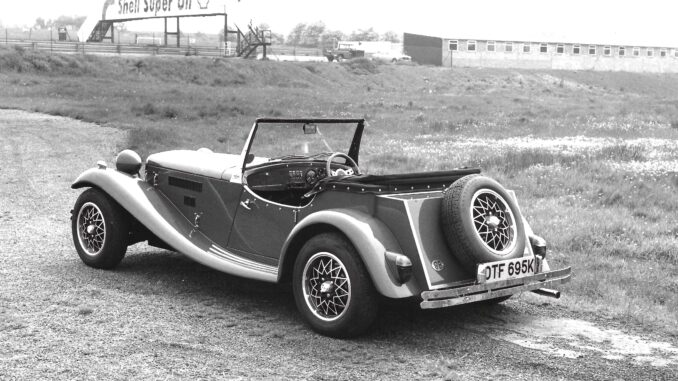
STEVE HOLE TELLS THE STORY OF JBA ENGINEERING – TALES OF FALCONS AND JAVELINS
For about 22 years the JBA Engineering was one of the UK’s leading kitcar manufacturers with their Falcon right at the top of the traditional roadster-style kitcar tree. Their demise was lightning quick. Why did such a popular company with a brilliant product suddenly come to such a sudden halt?
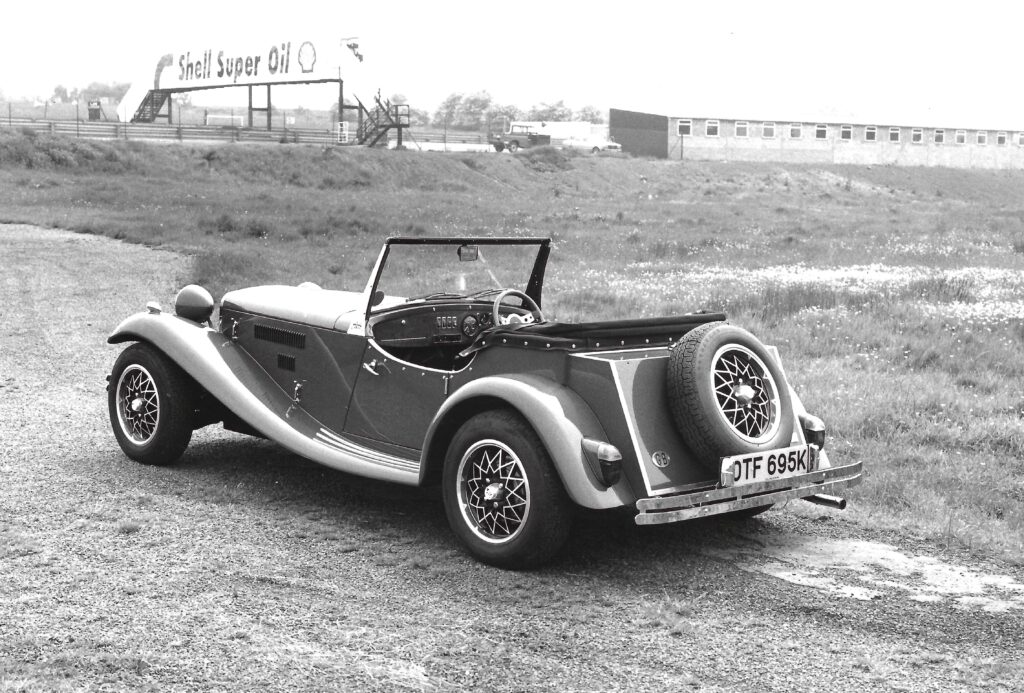
Let’s start at the beginning. The JBA name was formed from the first letter of the three protagonists surnames – Ken JONES, John BARLOW and Dave Ashley.
Let’s start with John Barlow, who left JBA quite soon after formation and would go onto become one of the most respected kitcar designers in the UK.
John was just fifteen when began an apprenticeship at British Leyland’s bus and truck division in Lancashire. He enrolled an a five-year course as a craft apprentice. His final year was 1977 and fittingly he was awarded apprentice of the year.
Leyland Motors was clearly very impressed with John and the budding young design engineer then started a technical apprenticeship, which included a year on the shop which was invaluable as he clearly knew the theory but this gave him a full-on practical knowledge.
After he was suitably qualified John got a position as Design Engineer in the drawing office, which is when he first met Ken Jones and Dave Ashley.
In his leisure time, John was a fan of specialist cars and was an avid reader of Filby’s Kit Snips column in Hot Car magazine.
Notoriously unhappy being in ths spotlight John later told me that he liked reading kitcar magazines but didn’t really like appearing in them, which he has many, many times over the years, by the way.
He also built a special, fabricating his own chassis and using Triumph Herald suspension and a Ford Pinto engine from an old Capri.
Unfortunately, Jones, Barlow and Ashley (sounds like a firm of estate agents, when written like that!) were made redundant by Leyland Motors in 1981, which kind of forced their hand to form JBA Engineering and give it a go as a full-time entity.
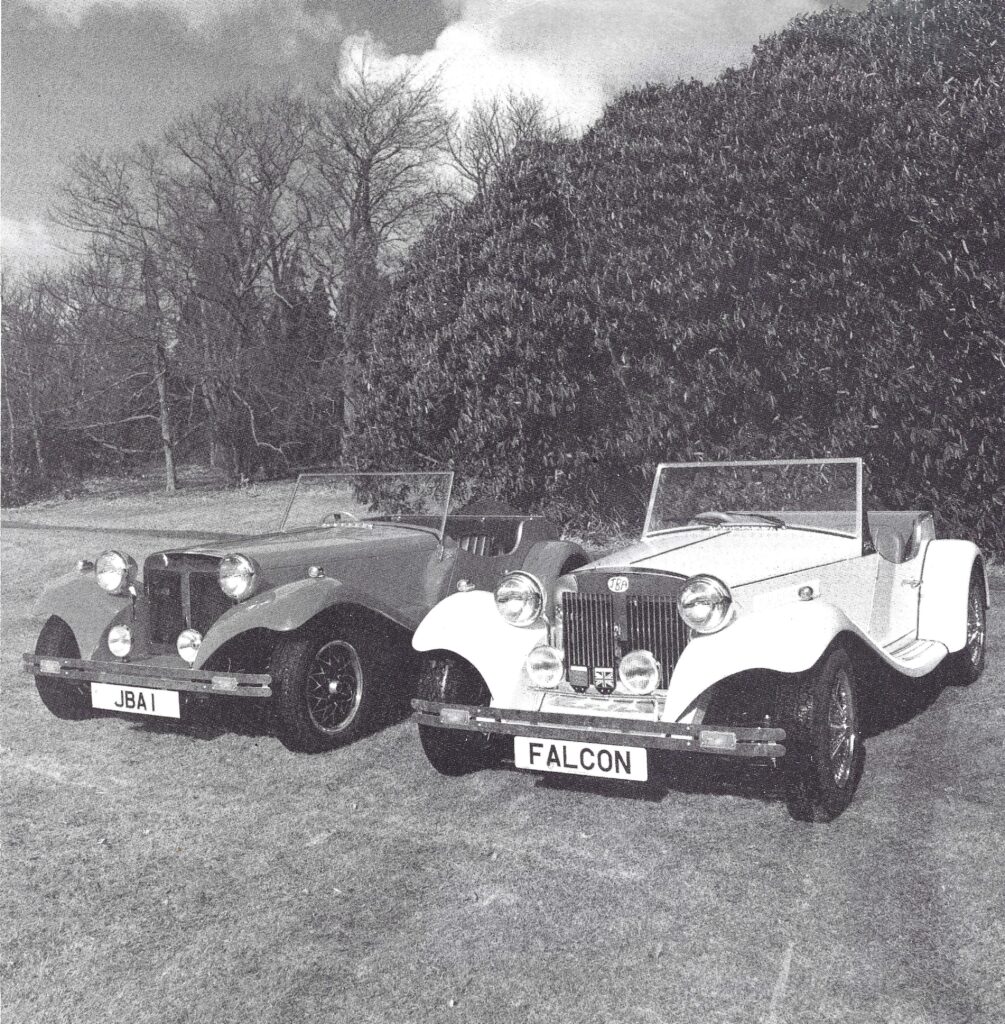
It certainly helped that young Barlow had designed a model that he felt would hit the spot as far as the kitcar buying fraternity were concerned. Launched in 1982, the Falcon Roadster model hit the proverbial ground running.
Traditional roadsters were particularly popular in kit form in the eighties and JBA rode that wave of popularity with the right product at the right time.
However, within a year or so, John decided to move on and with his wife Ann, he created Top Form Engineering specialising in the restoration of Jaguar XJs as well as selling GRP body parts for the car. This proved very popular although soon evolved into the Royale Motor Company and kitcar industry favourites like the Drophead, Sabre and Windsor. We’ve covered John’s post-JBA career in TKC MAG and his various subsequent models. A real craftsman if ever there was one.
Back to JBA Engineering and with Barlow gone, Ken and Dave pressed on and did really well for many years.
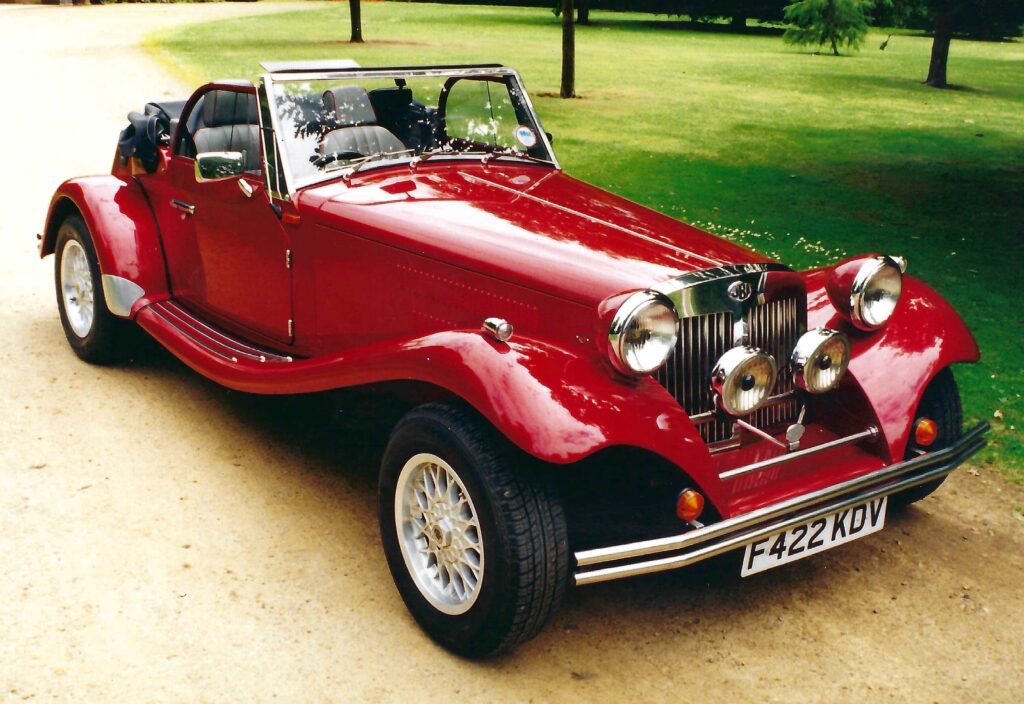
FALCON ROADSTER
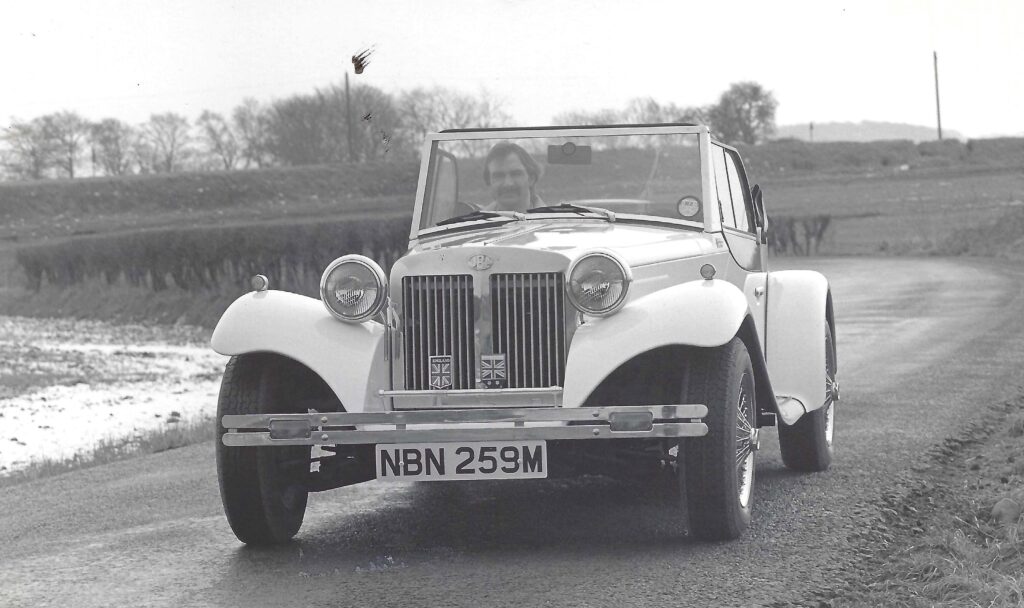
The first dozen Falcon Roadsters had steel bodies with GRP wings before a switch to an all-aluminium body (including doors), with GRP used for wings. When opened the bonnet had a ‘crocodile-like’ look.
The car was based on Ford Cortina mechanicals and is identifiable by being smaller than later Falcons and having a near vertical windscreen. There was no boot because the fuel tank lived in that space.
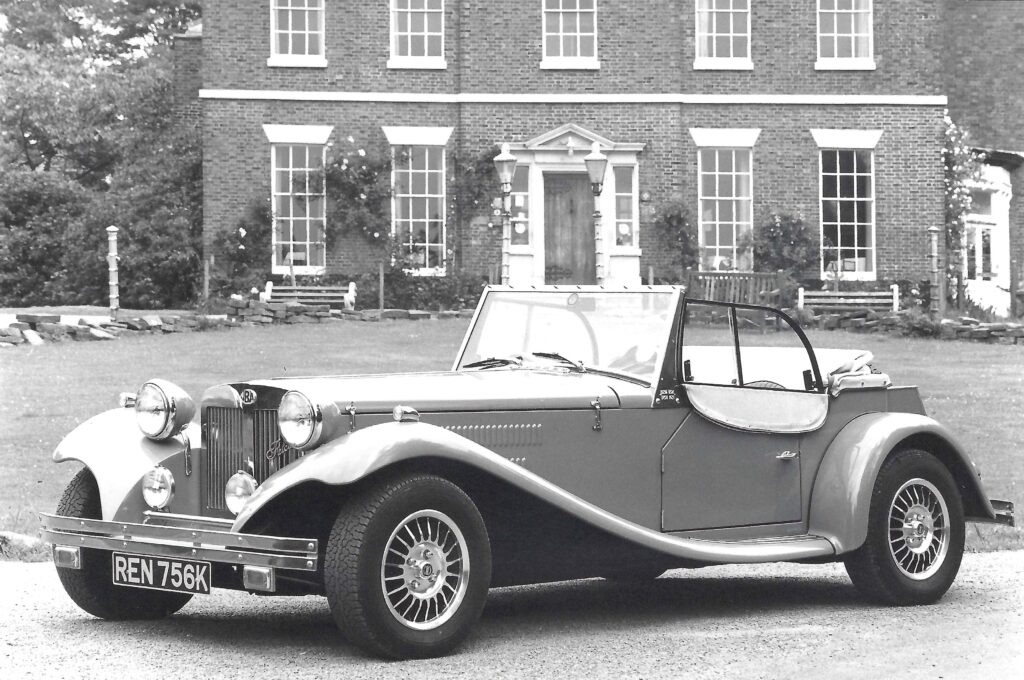
Power options were Ford four-cylinder as per the donor, or Ford V6, or even Rover V8.
JBA Engineering 1982-85
Approx 200 made
FALCON PLUS 2
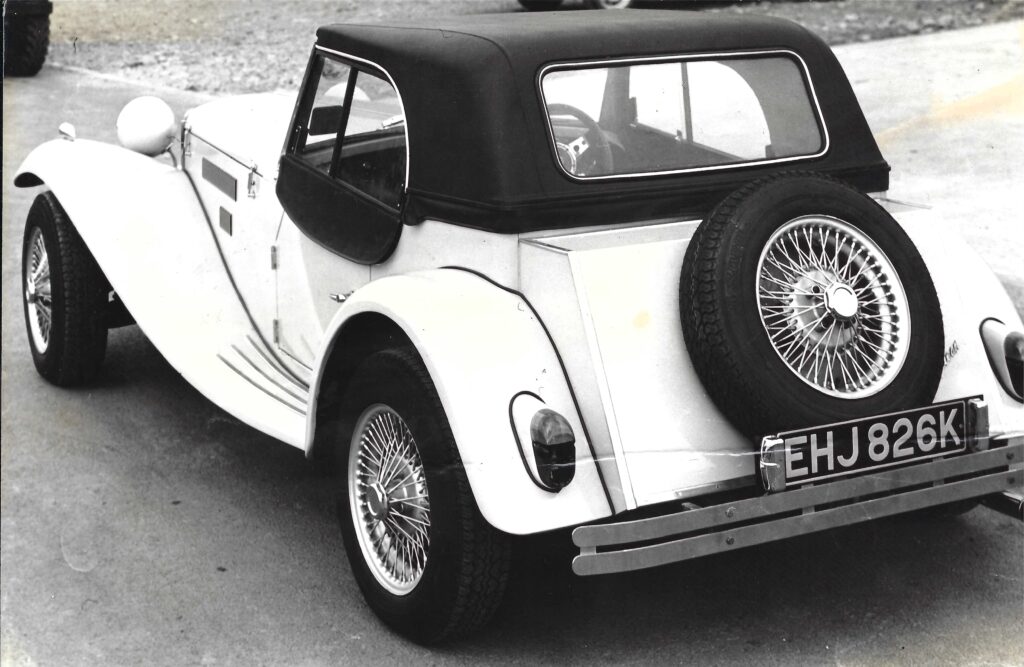
Replacing the Roadster in 1985 came the larger Plus 2 that featured a small bench seat in the rear that could accommodate children or small adults.
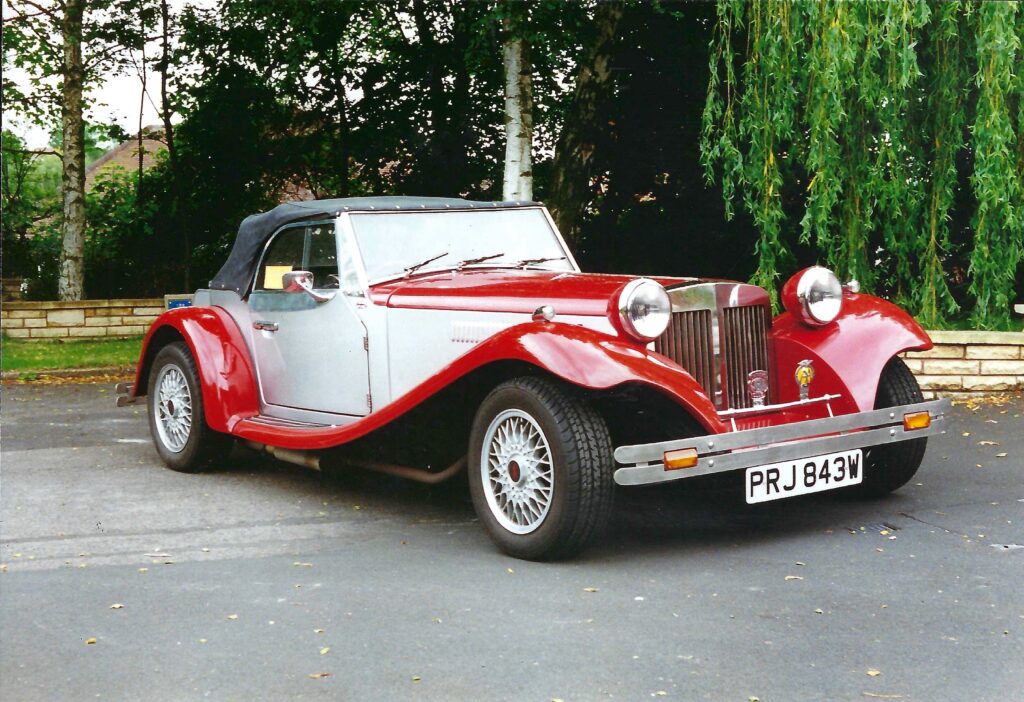
This one had a steel body frame with body panels from aluminium and GRP like the Roadster. It also had an opening bootlid.
The Plus 2 can be identified by a new windscreen that sat atop the scuttle, which was bolted directly to the top of it. The bonnet was now centre-hinged and both sides could be opned. The donor vehicle remained Ford Cortina.
JBA Engineering 1985-88
Approx 370 made
FALCON SPORTS
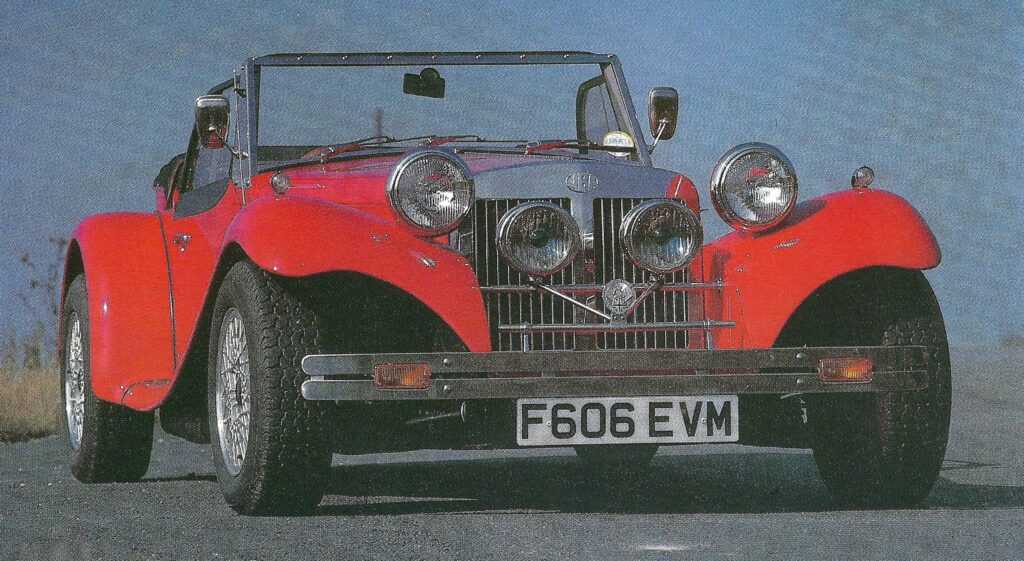
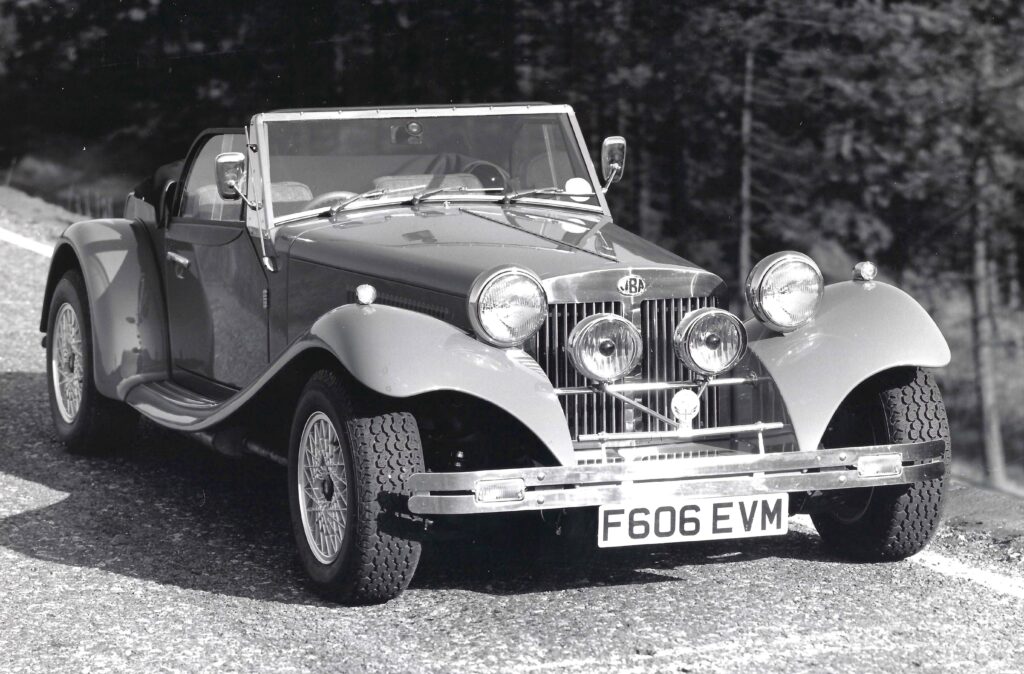
Appearing in 1988 the Sports was a return to a two-seater configuration. This version was lower, smaller and sportier looking, hence the Sports name.
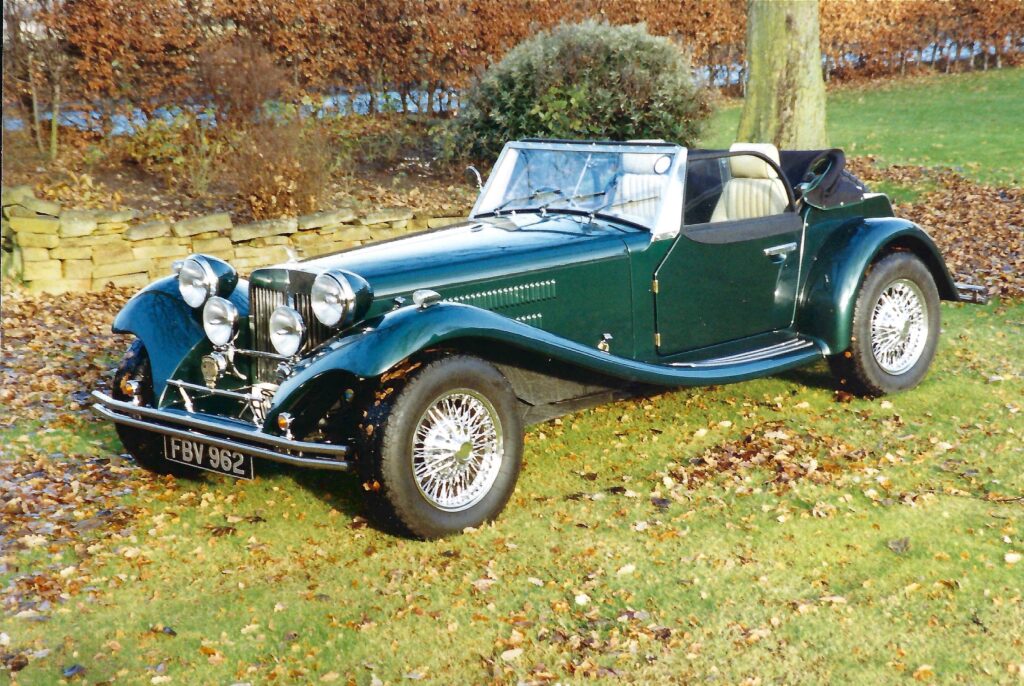
The Sports was the first Falcon to feature what JBA called the Central Body Unit (CBU) and the new structure definitely made the car more rigid.
Visually the car can be identified by a shorter windscreen with three wipers. The bootlid was again deleted as the fuel tank lived in that space.
JBA Engineering 1988-2001
Approx 284 made
FALCON TOURER
The Falcon Tourer was a direct replacement for the Plus 2 and was introduced in response to demand from customers for a larger Falcon. It was some 15in longer than the Sports model and had a genuine 2+2 capability although custoemrs could order a two-seater, if they preferred.
It featured a distinctive, sloped windscreen, again with three wiper.
JBA Engineering 1990-2001
Approx 265 made
FALCON SR/SRI
The first Falcon to be based on Ford Sierra donor. It was similarly-styled but actually had an all-new CBU and chassis to allow for the new donor so was a major change.
Visually almost identical to the Sports model. An SRI model added an opening bootlid, a more sloping grille and a slightly revised interior.
The SRI (aka an SR MkII) arrived in 1995 with the ‘I’ suffix denoting a fuel-injected engine, but cosmetically it also differed slightly by having a more sloping grille, a lockable boot and a revised interior.
JBA Engineering 1991-2005
Approx 270 made
FALCON TSR
The last Jones/Ashley-designed Falcon, the TSR was Tourer version of the SR that shared the Ford Sierra donor although could be ordered in either two-seater or larger 2+2 guises.
A big change as the CBU was made taller, longer and wider, which gave much better legroom (meaning that taller drivers could now be easily accommodated, elbow room was much improved.
The TSR also got a larger boot and bigger fuel tank.
JBA Engineering 1993-2004
Approx 310 made
SLIGHT DEPARTURE
We must mention the Javelin model. This was a totally different in concept to the Falcon and was based on Ford Capri Mk2 (or Mk3) with a rugged ladderframe chassis and a modern GRP body with targa front section with rear similar in style to a Landaulette in execution. It was much more than just a Capri with a roof-chop. Pretty complex build, though. This one was really Dave Ashley’s ‘baby’.
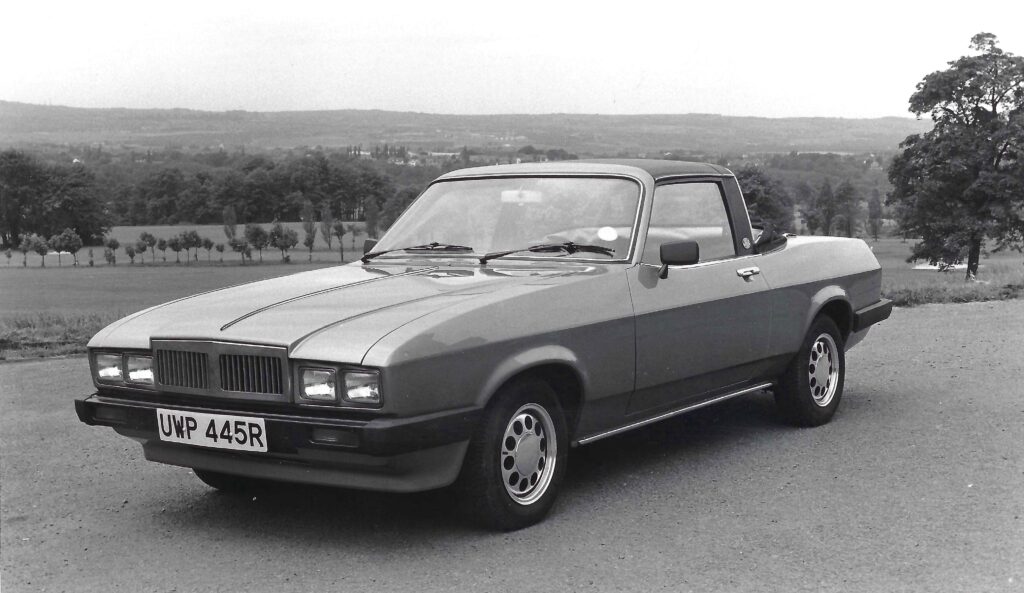
JBA Engineering 1985-89
Approx 55 made
BIG CHANGE
In late 2003 Dave Ashley announced that he and Ken had decided to retire and were looking for a suitable buyer to take the marque forward. Within a few months, in 2004, they sold the JBA operation to a chap called Tim Banwell. Dave and Ken agreed to stay on for a time to ease the handover until Tim was up to speed.
Some people have said that post-Dave and Ken, no JBA Falcones were sold in kit or fully built form, although I don’t know if this is true. Tim seemed like a nice chap and whenever I spoke to him over the year or so he remained trading he was enthusiastic about the Falcon and its future. Sadly, in late 2005, Tim decided to close the JBA shutter doors (he was still based in the original JBA workshop in Standish, Lancashire), for the final time.
Then, in 2011, Bill Willcock, a Norwich-based bsuinessman and JBA Falcon owner launched his ‘new’ version of the car, which was now based on BMW 3-Series (E36 or E46)-based Falcon, which had been under development since 2008. There was no connection between Bill’s JBA Motors and the old JBA Engineering.
Bill ran a very successful security shredding and recycling operation and he was helped by son Matt with the JBA Motors arm of his business.
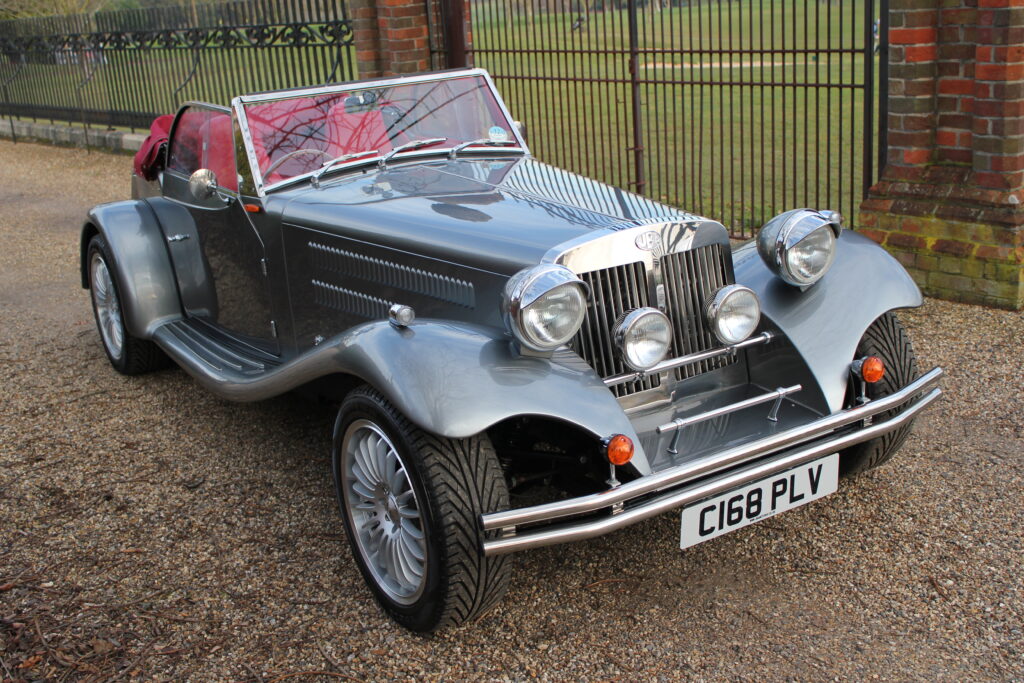
The ‘new’ Falcon, although, as mentioned, was based on BMW mechanicals although visually was more akin in visual terms to the original JBA Roadster of the early eighties, using the same windscreen mounting method ( mounted to the top of the scuttle section) as the Falcon Plus 2 of 1988.
I spent a great afternoon touring the Norfolk lanes in Bill’s demo car and I really rated it highly. I’m not sure how many he ultimately produced – maybe three or four – but I suspect the demands of his main business made it difficult to continue manufacturing Falcons.
JBA Motors 2011 to date
Approx 4 made
ROUNDING UP TIME
I was a big fan of Dave Ashley and Ken Jones and sover the years spent a fair bit of with them socially after shows or visiting JBA HQ to do features. Ken was a real craftsman, while Dave looked after the admin and marketing, primarily, although of course was a dab-hand in the workshop, too.
I can’t recall how many examples of the Falcon I drove over the years but it was certainly in double figures. They always presented superb demonstrators and I think there’s a reason why their customers loved them and also why I have never seen a badly built, scruffy Falcon.
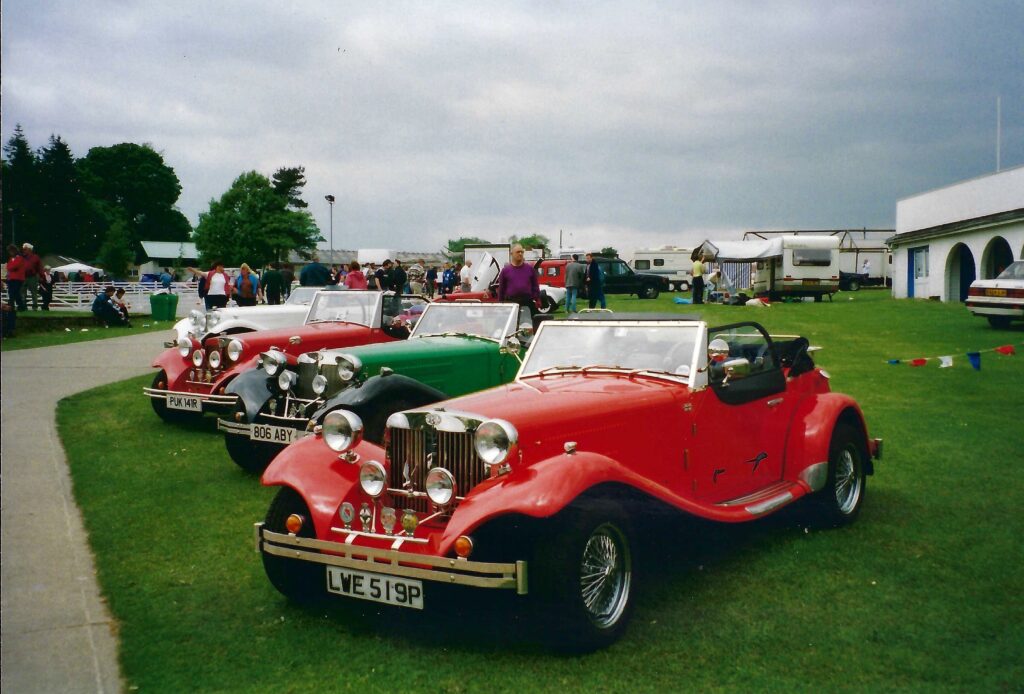
Hard to believe that the company has been gone for twenty years and both Dave and Ken, as well as the Falcon are still missed. The JBA Owners Club (www.jbaoc.org.uk) do a great job keeping the name alive and guarding the company’s well-earned legacy. A lovely bunch of folks, too.