






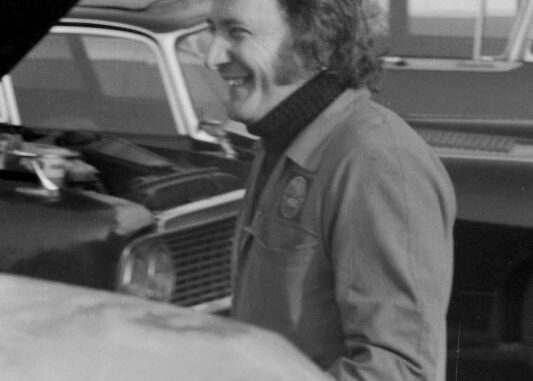
STEVE HOLE remembers UK hot rod pioneer Richard Park and his Custom City operation which, in 1969, teamed up with Geoff Jago’s Speed & Custom operation to unleash Rodding Scene.
Richard was born in Sri Lanka in March 1944. His family moved to England and settled in West Sussex, around the Chichester area. He always had a huge interest in cars and in the mid-sixties he began importing a whole host of American speed equipment and hot rod parts.
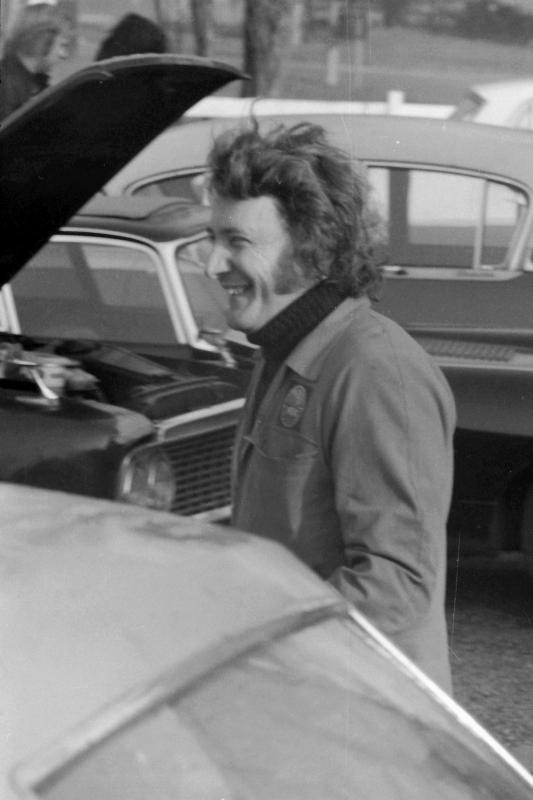
The late UK hot rod pioneer, Richard Park of Custom City and later part of Rodding Scene with Geoff Jago
Along with his friend and later business-partner, Geoff Jago (Speed & Custom), from nearby Portchester, across the border into Hampshire, Richard’s Custom City was at the forefront of the UK’s fledgling rod scene.
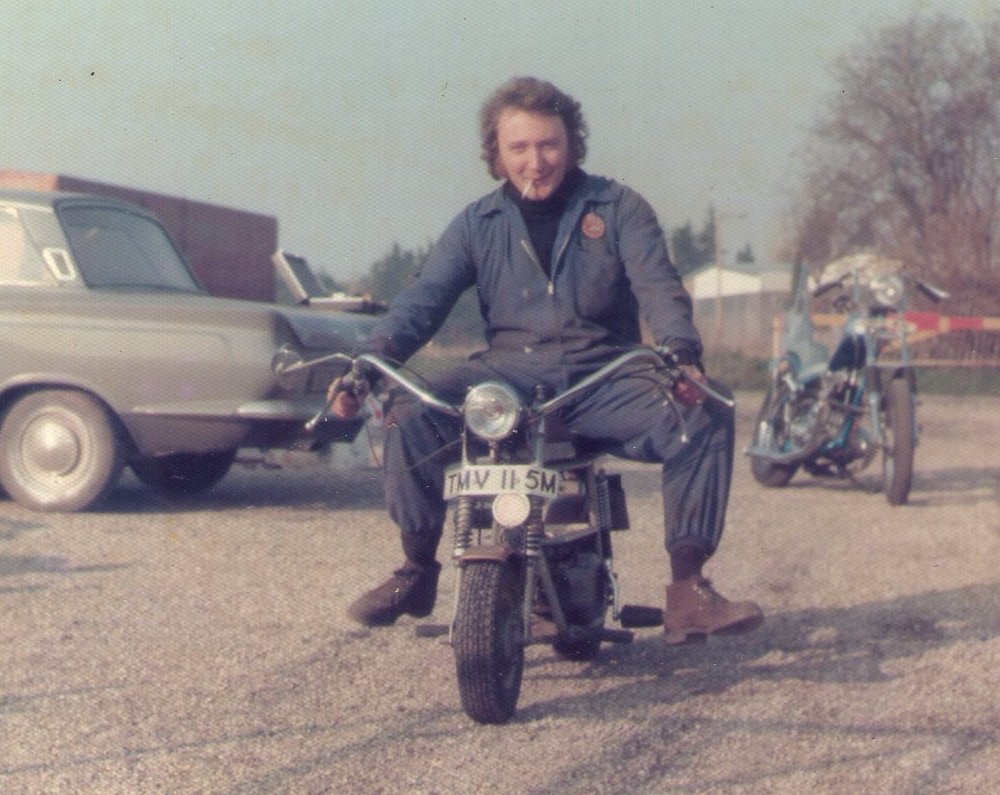
Richard possibly aborad a Trobike
Without these two the UK wouldn’t have seen a hot rod until much later. With ‘Jago One’, Geoff built what didn’t exist in the UK at the time and lit the blue touch paper. He subsequently sold well over 1000 hot rod kits and between them inspired many future leading rodders in the UK like Mickey Bray, Bryan Godber, Eddie Wimble, Nick Butler to name but a few.
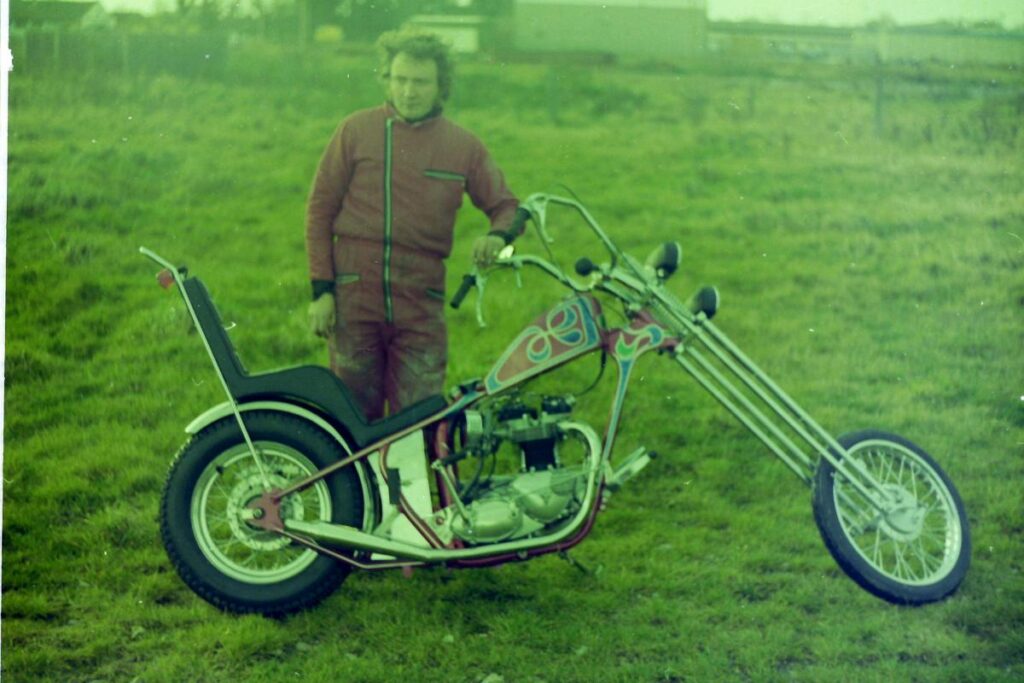
Richard applied paint to lots of custom choppers
It was no surprise when in 1969, Richard and Geoff joined forces basing themselves in old cement works on the A27 in Chichester that was known as Coles Yard. It was literally a bombsite when they bought it for £9000 in 1968.
That site became a well-known kitcar landmark for many years when Geoff’s Jago Automotive put it on the map. Incidentally, there’s still a Jago connection as Geoff’s son, Stuart now occupies the building.
Although Custom City and Speed & Custom continued to run autonomously, the pair set up a collaborative operation called Rodding Scene. There was room for all activities there, including all the speed equipment and hot rod parts that both parties pioneered. Indeed, Geoff was the UK’s first importer for Metalflake paint.
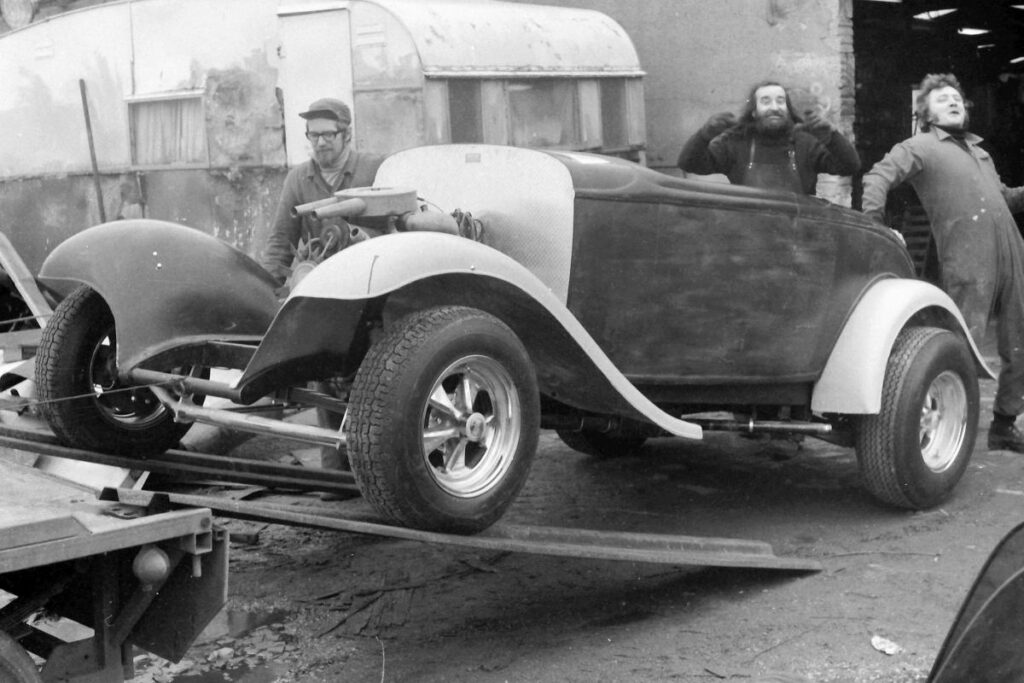
They didn’t just sell parts, goodies and hot rod kits, they built hot rods, choppers, offered custom painting and also did lots of external GRP work for various companies around the hot rod hot-bed of Chichester (a strong rival to Poole, by the way), while they also did commercial metalwork. One of their prime customer’s was Bob Jankel’s Panther Cars, for whom they made chassis.
There were lots of future hot rod and kitcar engineering greats who cut their teeth at Rodding Scene – name such as Michael ‘Fred’ Rutherfoord, Pete ‘Beard’ Benson, Tony Puttick, Bootlace, Pete Sturman, Kris ‘Pop’ Brown (Pop Brown’s Speed Parts and part of Unique Autocraft), Terry Howell, Squibbly Gale, Dave Harwood and Alec Miles (there were others, who also fuelled their later engineering careers working for Geoff and Richard.
Indeed, Brown later started his own household name – in hot rod terms, anyway – business Pop Brown’s, while Michael Rutherfoord and the late Pete Benson set up Mako Fibreglass (it kind of continued where Rodding Scene left off, after Geoff set-up Jago Automotive). Michael once told me: “Working for Richard and Geoff (he had officially been employed by Richard Park at Custom City aged sixteen, after his dad, Richard’s doctor asked if had a job his son could do!) at such an early age that you can do anything with a vehicle, limited only by your imagination. If you can think it; you can make it,” he said.
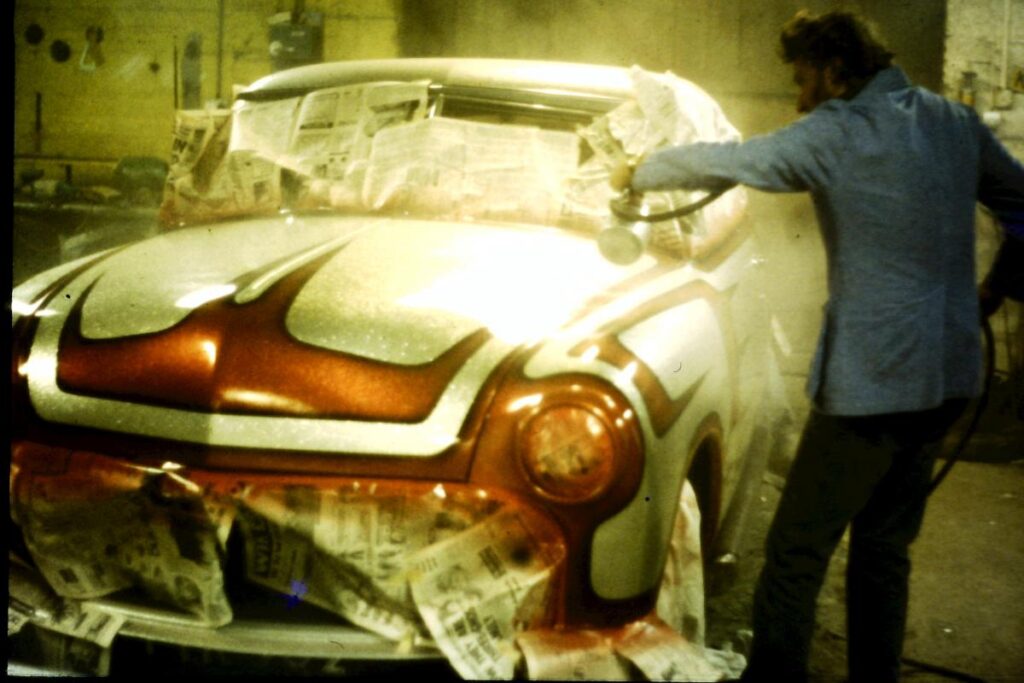
Richard was a gifted custom painter
Mako probably supplied West Sussex kitcar makers, other than Dutton and Eagle, with their GRP bodies, while the prototyped a few, as well as designing lots of kitcars along the way, such as the MCA Coupé.
Richard also took over the Speed Buggys (sic) operation run by Patrick Sumner and Roger Penfold and sold the Baja GT beach buggy kit for a while, too. Incidentally, their old farm premises is now Chichester Crematorium, while Patrick Sumner went on to enjoy a successful motor racing career, with Roger Penfold becoming a property developer.
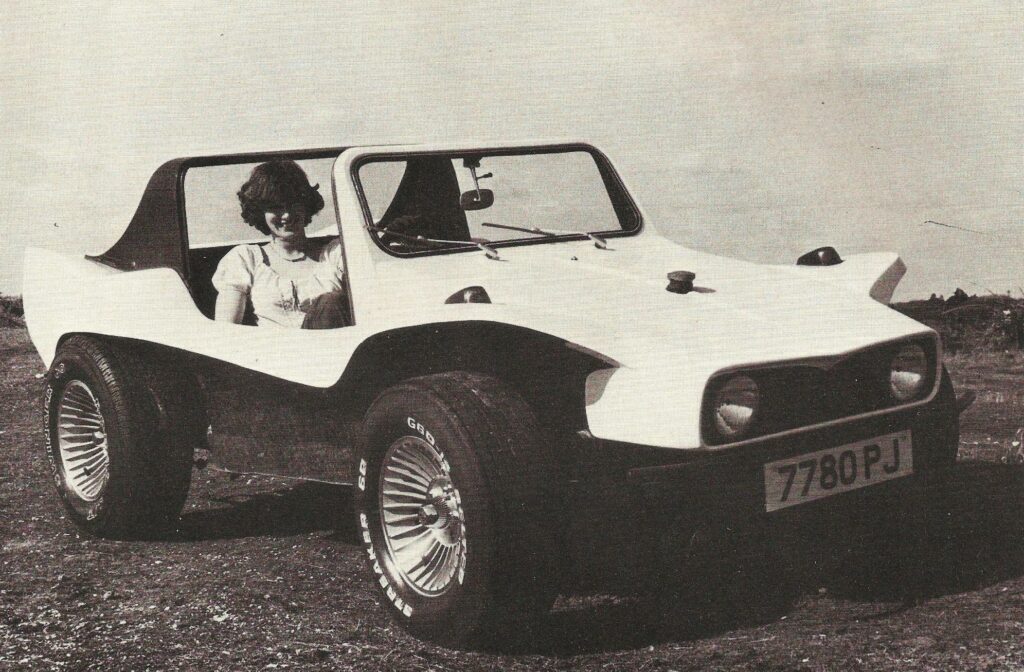
Like many others, Speed Buggys started out as agents for GP Projects, hiring the buggies out, although this seemed doomed to failure, and they soon became agents for Manta Ray manufacturer, Power On Wheels.
In 1970, they came up with plans for their own buggy, which un-surprisingly was based on a GP – and a hacksaw! – and used a VW Beetle floorpan chopped by 16in. One of their first demo cars had a Corvair 2.3-litre engine delivering 160bhp that Sumner rejoiced in ‘wheelying’ at every opportunity. The one-piece bodyshell made it fairly easy for the customer to build, although did mean that the petrol tank was notoriously difficult to fit.
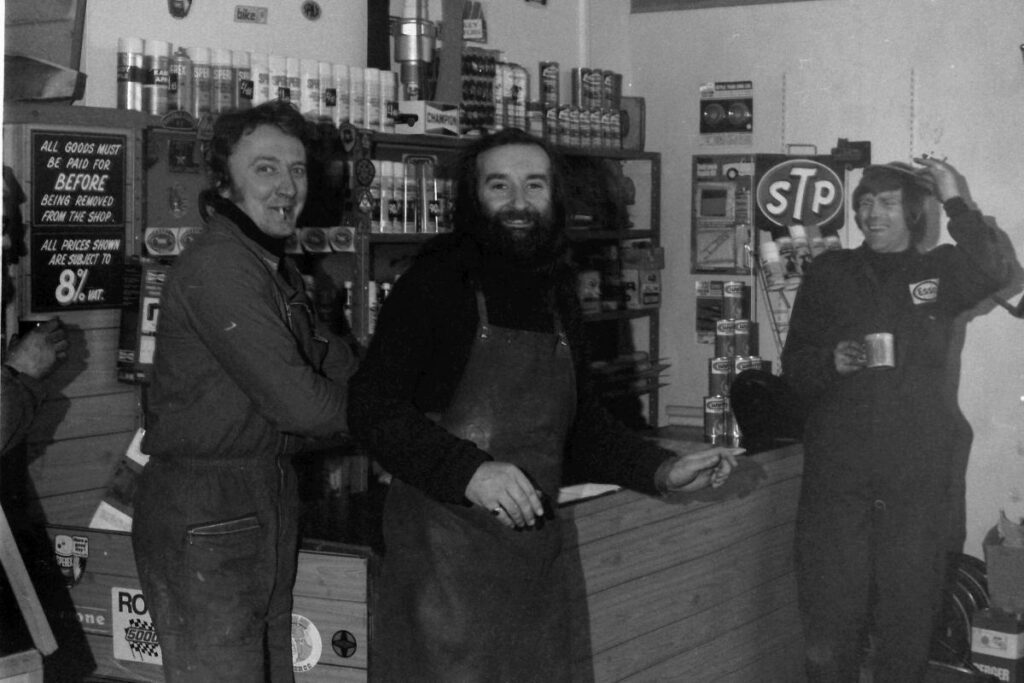
Three very clever engineers in this photo, all sadly no longer with us – Kris ‘Pop’ Brown (front), the late Peter ‘Beard’ Benson, back left, and Richard Park to right
At launch, the kit cost £185 with the body available separately at £58.
Sumner and Penfold soon became fed-up selling buggies in April 1971 and the project moved to Richard Park, as mentioned. He sold a further eight kits, Geoff once told me: “We chucked the moulds into a hedge and forgot about them.” Actually, the latter is disputed by Michael Rutherfoord.
Regardless, it wasn’t long before Alan Warren, of boat builders, Audy Marine based on Hayling Island pulled them out of said hedge, re-launching the Baja in 1977, although when his father’s boat-building concern won a large boat contract in 1978, it necessitated a move to larger premises in Milton Keynes and the Baja’s days were numbered.
Warren had however, tidied the kit up during his tenure and was selling kits at £180.55 inc VAT.
It subsequently passed through a few hands, including, inevitably, James Hale, who developed the Baja into his own Sahara, on a long wheelbase floorpan, before ending up at Horsham-based Budges Buggies in 1987. A total of 55 Baja GTs might have been sold.
Meanwhile, after five years or so Richard decided to move on from Rodding Scene and Custom City and sold his share of the Quarry Lane site making a considerable return on his original investment.
He kept busy working with cars and bikes and was a renowned custom painter and had a real passion for the Studebaker marque.
He would often return to his birthplace of Sri Lanka and would import all osrts of items to the UK such as motorbikes, pedal cars and tin-plate you cars and he opened an antique emporium in the Chichester area where he specialised in automobilia. he’d often be seen exhibiting at events such as the Goodwood Festival of Speed and Goodwood Revival.
Richard’s younger brother Howard was the manufacturer of the brilliant little Trobike (originally created by Trojan Cars and the forerunner of the Monkey Bike) for a time, so bikes and cars were obviously a family passion.
Richard died in May 2016 aged just 72.
I think it only right to pay a little homage to a man who didn’t really like the spotlight but was vitally important to the formative years of the UK’s specialist car movement. The words ‘icon’ and ‘pioneer’ are often bandied about but in Richard Park’s case they fit beautifully.
I’m not sure of the source of these photos – I suspect they may have originated from Howard Park – but I am keen to officially credit them, so in the meantime I’ll go with ‘photos courtesy (probably!) of Howard Park.